Tendon pain doesn't have to mean time off.
If a tendon in your knee, Achilles, or ankle has been nagging you for weeks, you can usually keep training while you build the tendon back up. The skill is knowing how much load it can take today. That's what this program teaches you.
It takes about three minutes, and your answers stay on your device.
How it works
Tendons get stronger when you load them, and they get irritated when you load them too much, too soon. Rest can calm things down, but it doesn't build the tendon back up. That's why the pain so often returns the week you start training again.
Instead of guessing, you use a simple daily check we call the 24-Hour Rule. Your training is on track when:
- pain during activity stays under 5 out of 10,
- pain and stiffness settle by the next morning, and
- pain doesn't creep up from one week to the next.
If all three hold, keep going and add a little. If they don't, ease off for the next session. The free guide walks you through it and comes with a log you can print.
Who it's for
Adults who lift, run, fight, or play a team sport, with tendon pain just below the kneecap, in the Achilles, or around the ankle (the inner, outer, or front tendons). Usually it's been around for more than six weeks, it eases once you warm up, and it's stiff in the morning.
Some things need a doctor first, like a pop or snap, a hot or swollen joint, or numbness down the leg. The Tendon Check asks about those before anything else, so you'll know right away.
Common questions
Do I have to stop training?
Usually not completely. In one study of people with Achilles pain, those who kept training under a simple pain-monitoring rule did as well as those who rested. The 24-Hour Rule shows you what your tendon handles right now. You keep what passes and scale back what doesn't.
Will the Tendon Check tell me what's wrong?
No. This screening is not a diagnosis. It tells you whether your answers match the pattern this training program is built for, and it flags anything that means you should see a doctor first. Only a licensed professional who examines you can tell you what's going on.
How long will it take?
Most people need 12 weeks or more. Tendons adapt slowly, so be wary of anyone promising quick results.
Do I need a gym?
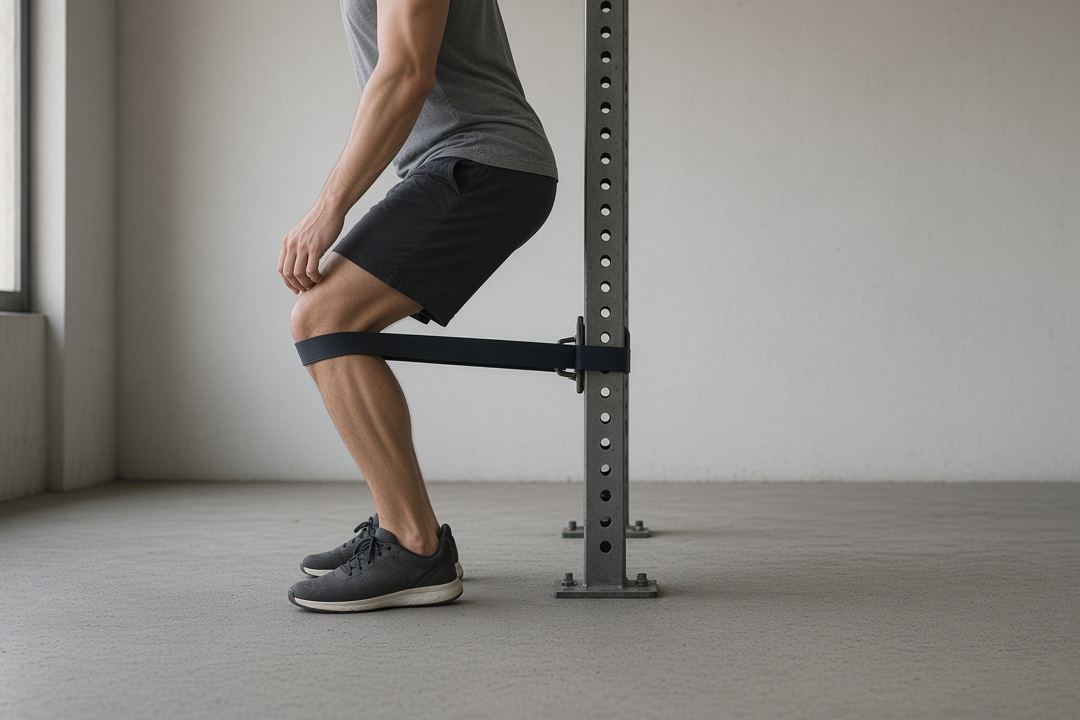
Not to start. The first phase uses a strap, a step, and your bodyweight. Later you'll need a way to add load. A gym is easiest, but a loaded backpack or dumbbells can work.
What does the program cost?
One program, one price: [PRICE]. It isn't open yet. You can join the free waitlist on the program page.